
What are the Common cathode LED display screen?
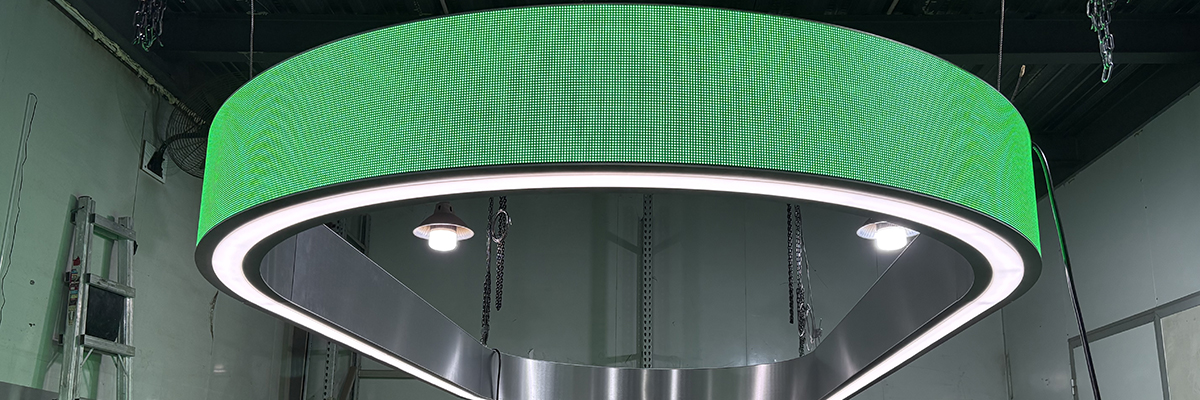
With the development of the times, LED display screens have become an integral part of everyday life. Whether in indoor environments such as museums, conference rooms, and chain shopping malls, or in outdoor settings like roadsides, building façades, and transportation hubs, LED displays can be seen everywhere. At the same time, LED display technology is evolving at a rapid pace. Today, we will introduce a new type of energy-saving LED display—the common cathode LED display.
- 11. What is the common cathode energy-saving technology
- 22. What are the key features of common cathode energy-saving LED displays
- 33. Differences between common cathode and common anode
- 44. The future trends of common cathode LED displays
- 55. Conclusion
1. What is the common cathode energy-saving technology
Common cathode refers to an LED display power design in which the red (R), green (G), and blue (B) LEDs within each pixel are driven separately and precisely. Each color channel is supplied with its optimal operating voltage and current, ensuring accurate control and stable performance.In a common cathode configuration, the driving current passes through the LED lamp beads first and then flows to the negative electrode of the driver IC. This structure effectively reduces the forward voltage drop and internal resistance, minimizing power loss and heat generation.As a result, common cathode LED displays achieve significantly higher energy efficiency, improved thermal management, and extended product lifespan.2. What are the key features of common cathode energy-saving LED displays
I. Enhanced Energy Efficiency
Common cathode technology significantly improves energy efficiency by supplying precise voltage and current to each individual red, green, and blue LED. This optimized power delivery minimizes energy loss and heat generation, resulting in lower power consumption and reduced operating costs without compromising display performance.
II. Reduced Heat Generation
By allowing current to flow more efficiently through each LED, common cathode displays operate at lower temperatures. Reduced thermal stress not only improves system stability but also contributes to longer component life and improved overall reliability.
III. Superior Color Accuracy and Contrast
With independent control of each color channel, common cathode technology delivers highly accurate color reproduction, stable brightness, and excellent contrast ratios. The result is deeper blacks, more vivid colors, and a more realistic and immersive visual experience.
IV. Extended Product Lifespan:
Compared with common anode LED displays, LED displays using common cathode driving technology consume less power and operate at lower temperatures. This reduces thermal stress and extends the service life of key components such as LED lamp beads, power supplies, and receiving cards.
V. Save Operating Costs
Compared with conventional designs, common cathode LED displays consume less power during operation. This not only reduces electricity expenses but also lowers maintenance costs, helping to significantly cut overall operating expenditure.
3. Differences between common cathode and common anode

Different ways power supply to LEDs
In a common cathode design, current flows first through the LED chip to the IC’s negative terminal, resulting in lower forward voltage drop and reduced internal resistance, which enhances overall power efficiency. In contrast, a common anode design supplies current from the PCB to the LED lamp beads with a unified power to all R, G, and B channels, leading to a higher forward voltage drop and slightly lower efficiency.
Difference voltage input for RGB
Common cathode designs provide individually optimized voltages for each LED color (≈2.8 V for red, ≈3.8 V for green and blue), reducing power consumption and heat generation. Common anode designs use a single higher voltage (e.g., 5 V) for all colors, exceeding the optimal voltage for some LEDs. This increases power consumption (P = U × I) and heat output during operation.
4. The future trends of common cathode LED displays
a, the supporting upstream and downstream industrial supply chain is not yet fully mature;
b, common cathode driver IC technology still requires further improvement;
c, due to their relatively small market share, initial production costs remain high and economies of scale have yet to be realized.
However, in the context of a global push toward energy conservation and emission reduction, common cathode LED displays—thanks to their outstanding energy-saving performance and long-term cost-effectiveness—are expected to gradually overcome these limitations and achieve broader development prospects in the future.



Comments