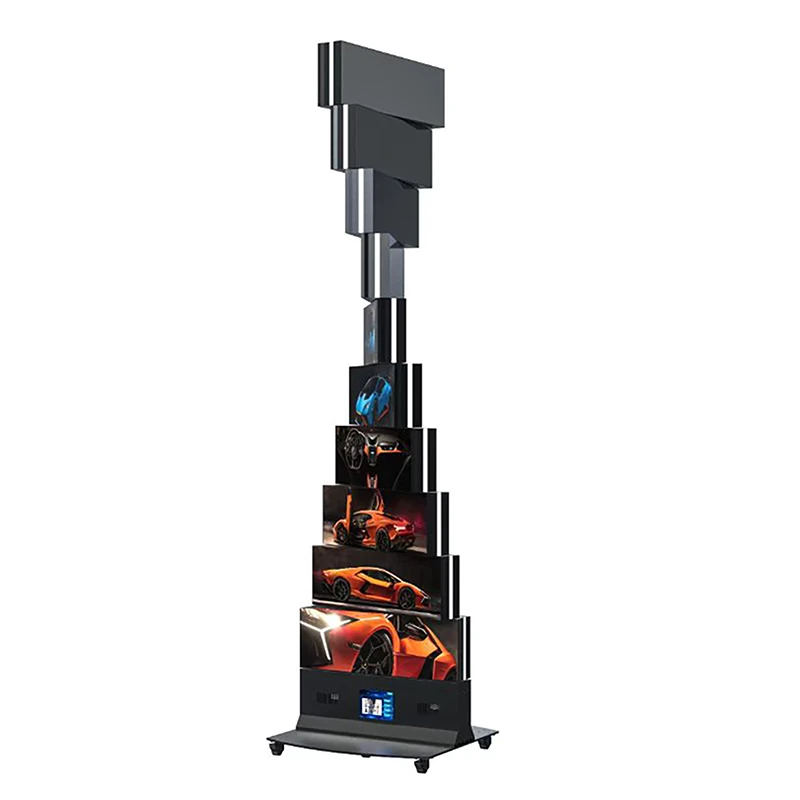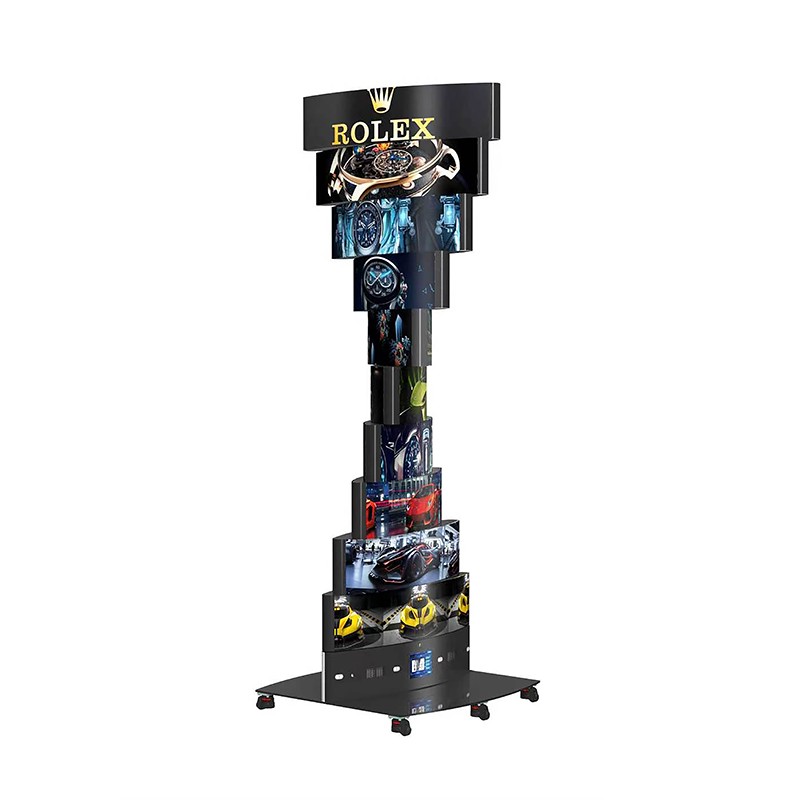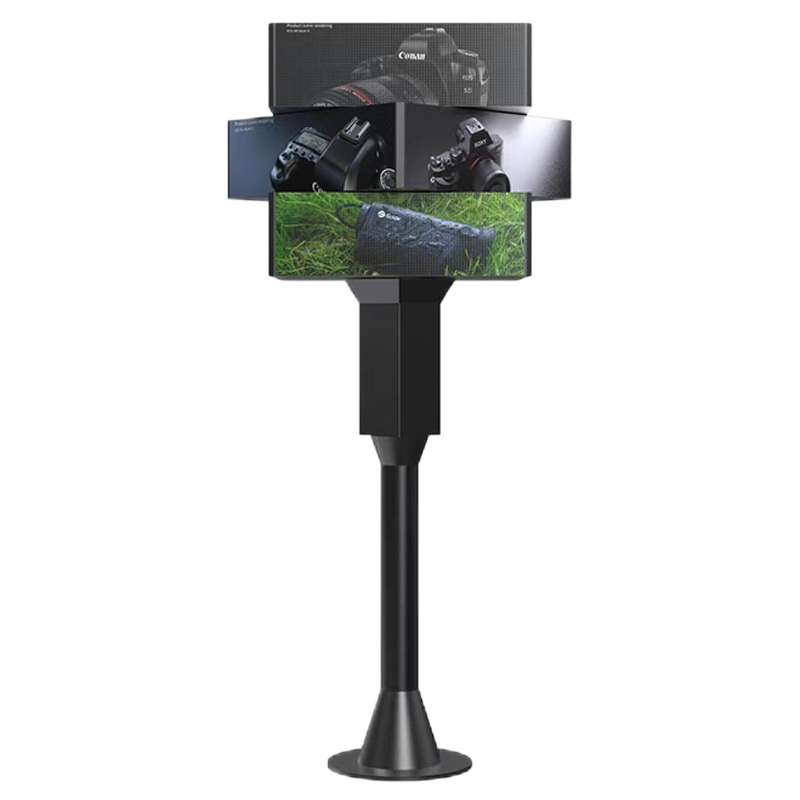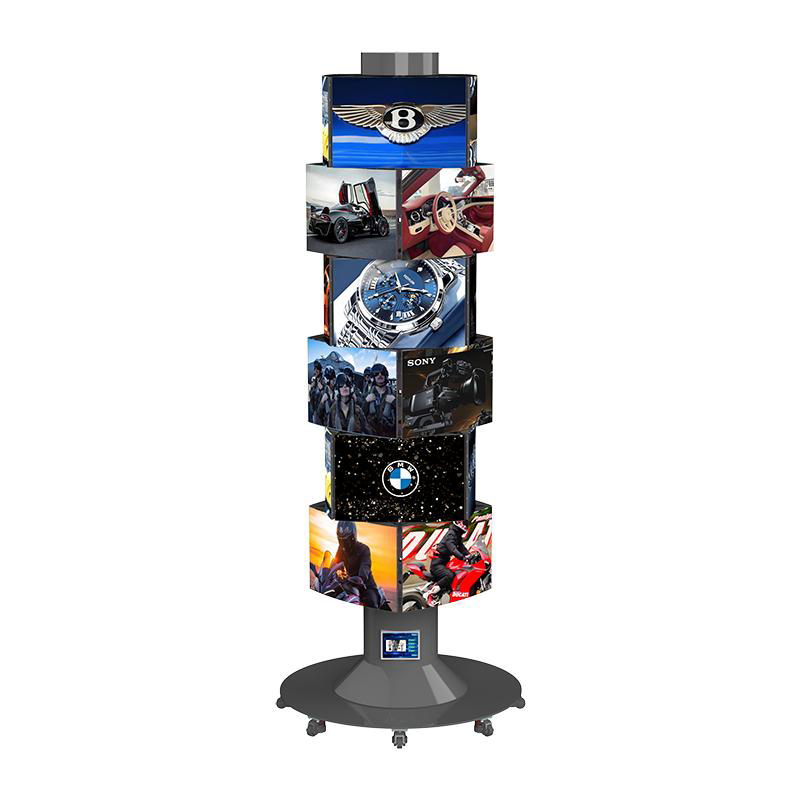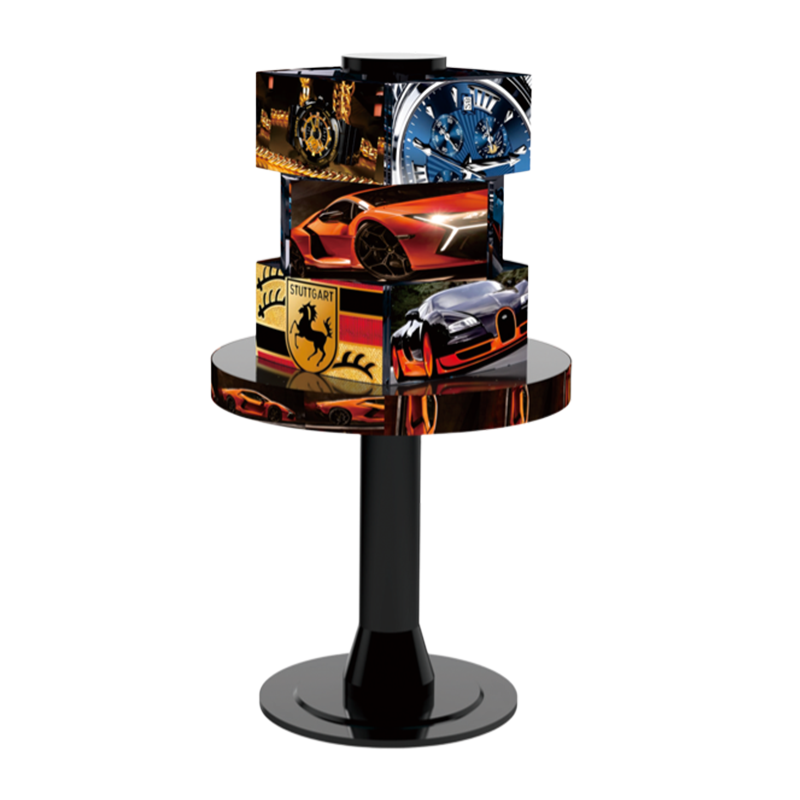
The most prominent features of LED mechanical screens are their dynamic appeal, space utilization efficiency, and unique expressiveness; their application scenarios can cover various fields such as commerce, retail, culture and entertainment, and sports.
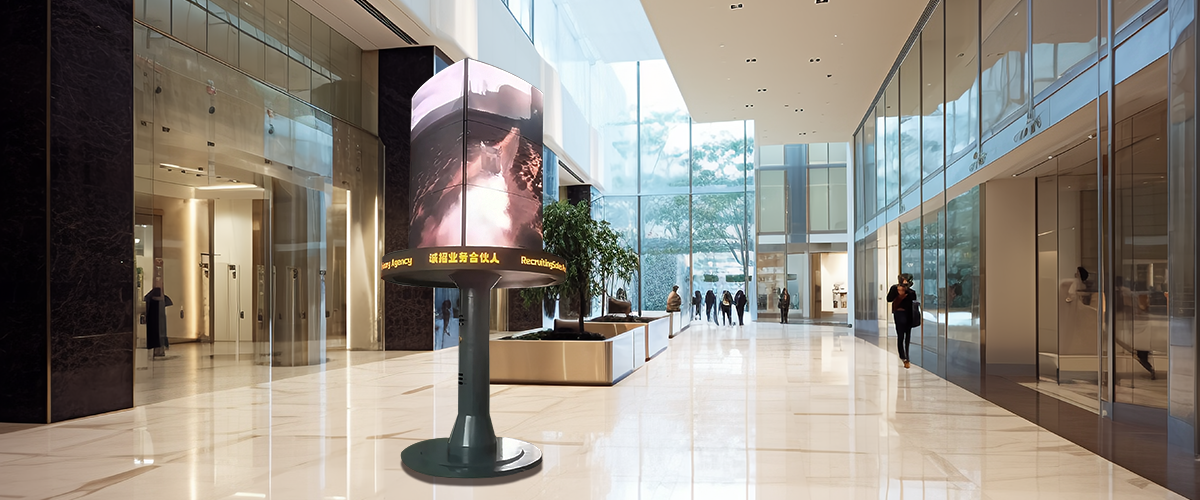 I. Core structure and mechanical design
1. Layered and rotational mechanism
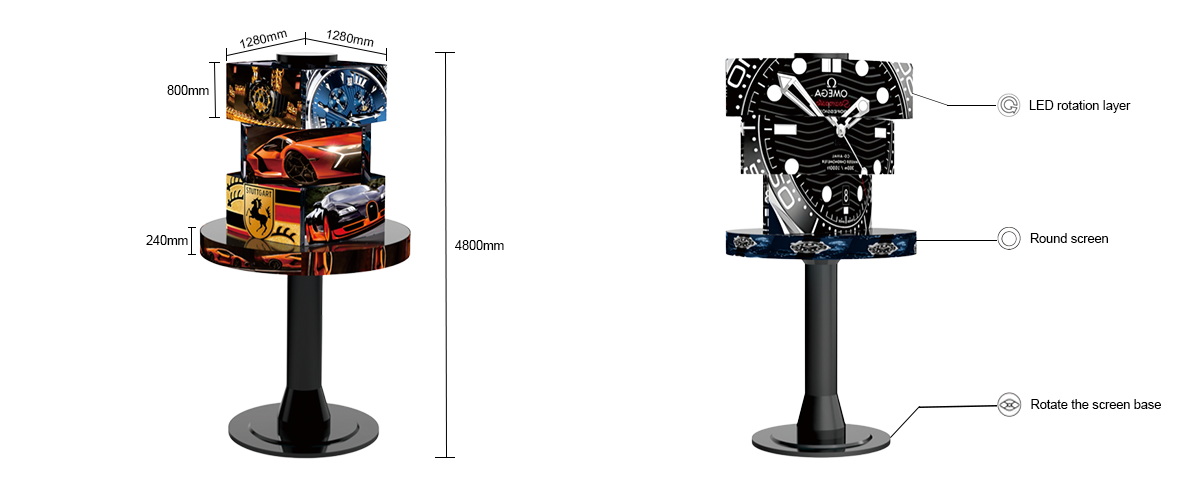
- Three-layer architecture: the display consists of three independently rotating mechanical modules, each capable of horizontal or vertical rotation along a central axis for 360-degree dynamic presentation.
- Four-sided display: each layer incorporates four independent display surfaces with 90-degree angles between adjacent faces, ensuring multi-angle visual coverage.
2. Mechanical transmission and stability
Transmission coordination: a distributed drive system can be employed, consisting of multiple motors and precision gear sets, each layer independently controlled but requiring synchronized control.
Increased stability challenges: inter-layer connection points and changes in the center of gravity during deformation introduce complex torques and vibrations, necessitating simulation optimization using finite element analysis.
Control is crucial: a central controller is required to coordinate and manage all servo motors, deformation mechanisms, and display content; command issuance must achieve millisecond-level synchronization accuracy.
 II. Display technology and performance parameters
1. Display surface features
- Curved stereoscopic design: arc-shaped surfaces enhance wide-angle viewing and minimize distortion. For example, multi-layer tower LED screens use curved panels for striking rotational effects.
- Fine-pitch LED modules: utilizes P2–P3 SMD three-in-one packaged LED chips, delivering high brightness and contrast (≥10,000:1).
2. Dynamic display capabilities
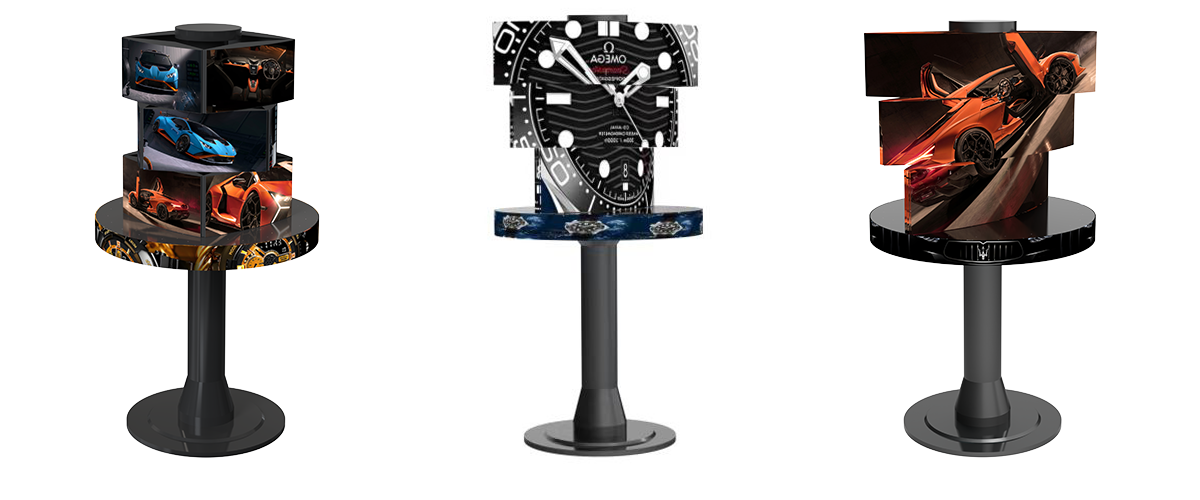
- Independent panel control: each surface can play videos, animations, or text independently, supporting synchronized or asynchronous switching. A three-layer, four-sided screen can display 12 independent visuals simultaneously, with complex effects programmed via software.
- High refresh rate: ≥3,840Hz refresh frequency eliminates motion blur and stuttering, ideal for high-speed content (e.g., sports events, advertisements).
3. Color and brightness adjustment
- Wide color gamut: covers ≥120% NTSC with a color deviation (ΔE) ≤0.9 for accurate reproduction.
- Smart brightness control: supports 0–100% stepless dimming to adapt to varying ambient lighting.
 III. Control system and intelligent features
1. Automated control platform
- Siemens programmer: instructions are programmed via computer and converted into signals to drive servo motors, enabling precise rotation and deformation.
- Remote management: 4G/5G or Wi-Fi connectivity allows remote power control, speed adjustments, and content updates, reducing operational costs.
2. Content playback system
- Multimedia server: equipped with high-performance servers.
- Scene presets: pre-programmed light effects and motion trajectories enable quick switching between scenarios (e.g., festivals, daily advertisements).
3.Smart interaction extensions
- Interactive interfaces: supports touch, or mobile app control for enhanced audience engagement (e.g., exhibition displays).
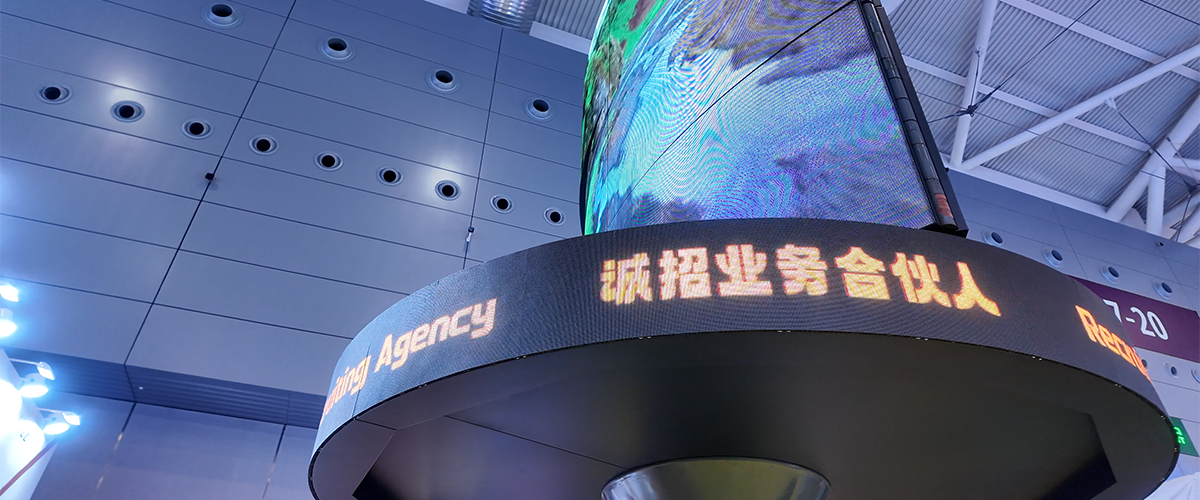 IV. Application scenarios and case studies
1. Commercial advertising and branding
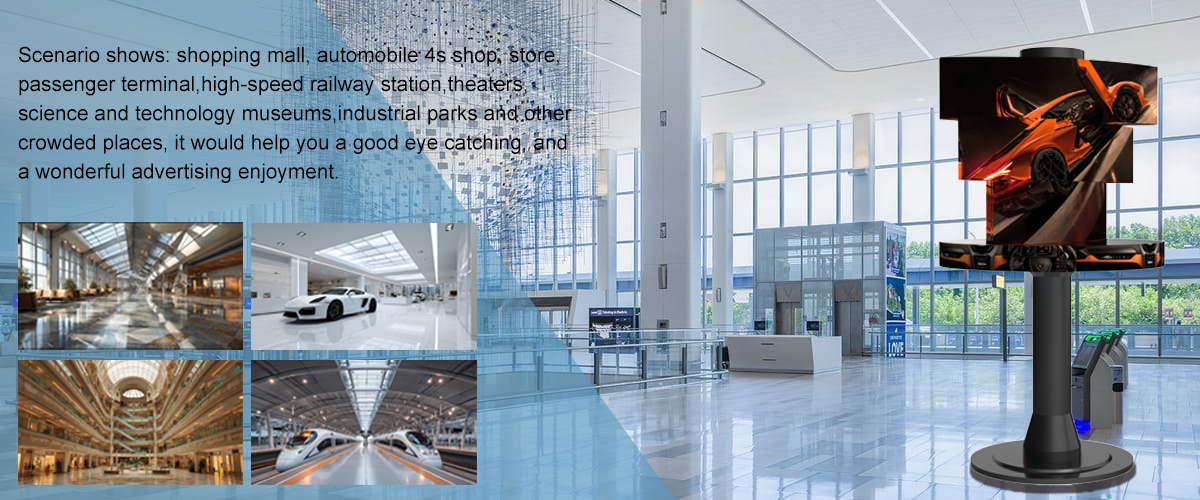
- Shopping mall atriums: three-layer, four-sided screens attract foot traffic with rotational visuals, such as a six-sided mall installation displaying brand ads across all layers.
- 4S car dealership:the combination of a rotating mechanical structure and an LED display screen plays exciting videos, increasing consumers' desire to buy.
2. Business exhibitions and technology expos
- Exhibitions: modular design enables rapid setup for touring events (e.g., auto shows, tech expos).
3. Public information dissemination
- Transportation hubs: airports and train stations deploy transformable screens for rotating flight/train schedules and advertisements, improving information delivery.
- Smart cities: combined with environmental sensors, screens display real-time weather or air quality data for public service.
 V. Parameter table
| Detail | Parameter | Remark | |
| Display | Display Model | Indoor P3 | Optional |
| Module Specification | 320x160 Flexible Module 320x160 | ||
| Layers | 3 Layer | ||
| Dimension | Length1280mm;Width 1280mm; Height 4800mm | ||
| Appearance | Cambered Surface (Wide View Angle) | ||
| Faces | 12Faces | ||
| Single Face Size per Layer | 1280x800/face | ||
| Total Size | 5120x2400 | ||
| Weight | Around 2270KG | ||
| Height | 4800mm | ||
| Max Power Consumption | 11.9KW | Max Power Consumption11.9KW | |
| Intelligent Control | Rotating Mode | Default Mode/Custom Mode | Rotating Mode Optional according to play images |
| Rotating Speed | Adjustable | Moving Speed Adjustable according to customer or play images | |
| On/Off Equipment | on/off by touchscreen or mobile phone | ||
| Image Control | Wireless upload | Tablet & PC uploading | |
| Installation | Power Supply | 220V | 220V |
| Equipment Installation | Chassis Included |