
Can LED Screens: Reshaping Brand Marketing with 360° Cylinder Displays
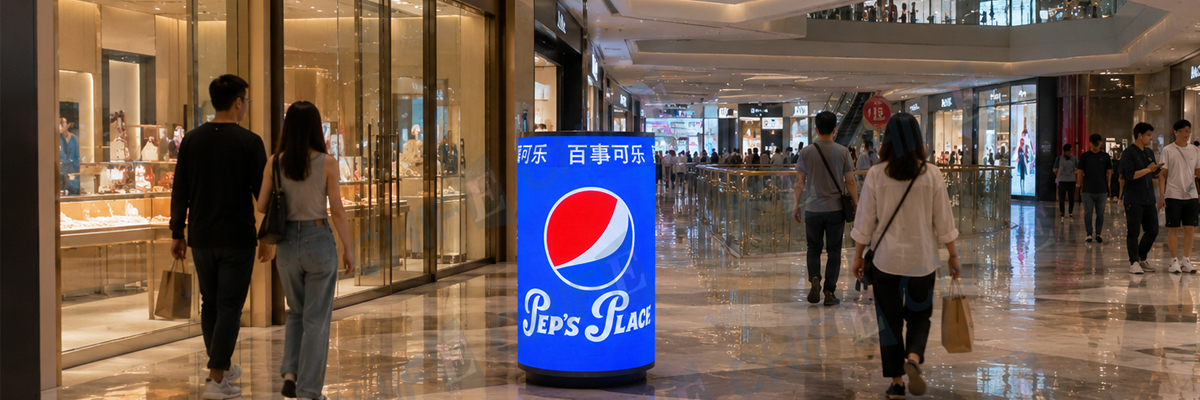
In today’s advertising landscape, consumers are constantly exposed to countless flat, rectangular billboards and digital displays. As a result, traditional signage is increasingly challenged by a phenomenon known as “banner blindness”—the tendency of audiences to subconsciously ignore conventional advertisements.
To stand out in a crowded visual environment, brands, retailers, and event organizers are seeking more immersive and memorable display solutions. This is where the Can LED Screen comes into play. Combining innovative structural design with highly realistic product replication, the Can LED Screen transforms ordinary advertising into an engaging visual experience. Whether designed as a giant soda can, a beer bottle, or another custom-branded product shape, this cylindrical LED display captures attention instantly and encourages deeper audience interaction. More than just a screen, it becomes a powerful brand statement that turns passive viewers into active participants.
In this comprehensive guide, we’ll explore the technology behind Can LED Screens, their key features, practical applications across different industries, and the return on investment they can deliver for businesses looking to maximize brand visibility and customer engagement.
- 1I. What is a can LED screen?
- 2II. Core features of can-shaped LED displays
- 2.11. 360° panoramic visibility
- 2.22. High-flexibility LED modules
- 2.33. Seamless curved splicing
- 2.44. Intelligent plug-and-play content management
- 2.55. AI smart voice control
- 2.66. Mobility and easy deployment
- 2.77. IP65 waterproof protection
- 2.88. Front maintenance design
- 3III. Prime application scenarios
- 3.1A. FMCG and beverage brand activations
- 3.2B. Bars, nightclubs, and entertainment venues
- 3.3C. Shopping malls and atrium advertising
- 3.4D. Trade shows and corporate showrooms
- 4IV. Pros and Cons of can LED screens
- 5V. Frequently asked questions (FAQ)
- 6VI. Future outlook: Where is the market heading?
- 7VII. Technical specifications of Coke can LED display
- 8VIII. Conclusion
I. What is a can LED screen?
A Can LED Screen, also known as an LED soda can display or cylindrical LED display, is a type of creative LED display designed to deliver immersive 360-degree visual experiences. Unlike conventional flat LED screens built with standard rigid cabinets, a can-shaped LED screen uses flexible LED modules seamlessly integrated onto a cylindrical structure.
Designed to replicate the appearance of a beverage can, this innovative display solution allows beverage brands, FMCG (fast-moving consumer goods) companies, retail stores, and entertainment venues to showcase dynamic, high-resolution content on a three-dimensional surface that closely resembles their actual product packaging. By combining eye-catching design with vivid digital storytelling, can LED screens create a powerful visual impact that enhances brand visibility and audience engagement.
II. Core features of can-shaped LED displays
What makes a can-shaped LED display such an impressive engineering achievement? Below are the key features that set it apart from traditional flat LED screens and make it a popular choice for creative digital advertising.
1. 360° panoramic visibility
Unlike conventional flat displays with limited viewing angles, a can-shaped LED screen delivers true 360-degree visibility. Its cylindrical design ensures that content can be seen clearly from every direction, eliminating blind spots and maximizing audience engagement in high-traffic environments.
2. High-flexibility LED modules
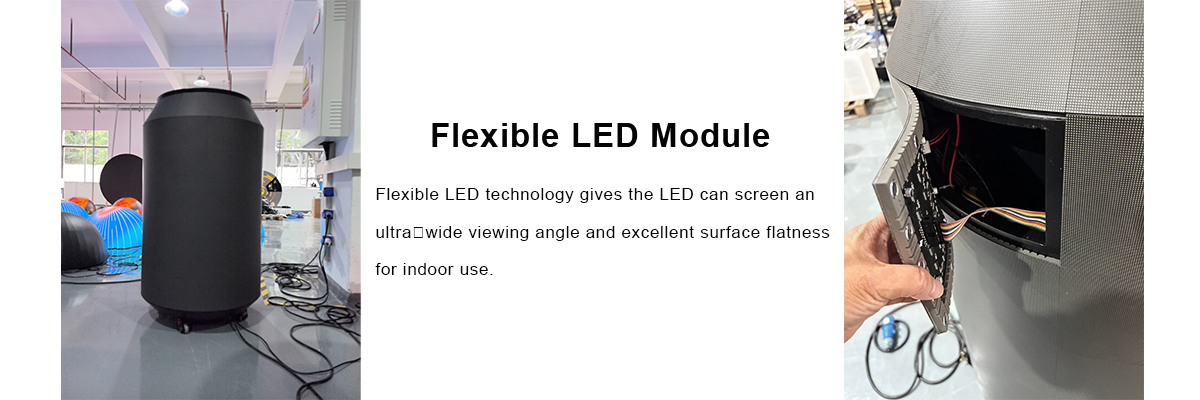
The display is built with specially engineered flexible PCB (Printed Circuit Board) technology and durable silicone-based module structures. These components allow the modules to bend smoothly into curved shapes without damaging circuit traces or affecting LED performance, ensuring long-term reliability.
3. Seamless curved splicing
Precision CNC-machined cabinet structures enable each flexible module to fit together perfectly. This creates a smooth, continuous cylindrical surface with no visible gaps, seams, or image distortion, delivering a premium visual experience.
4. Intelligent plug-and-play content management
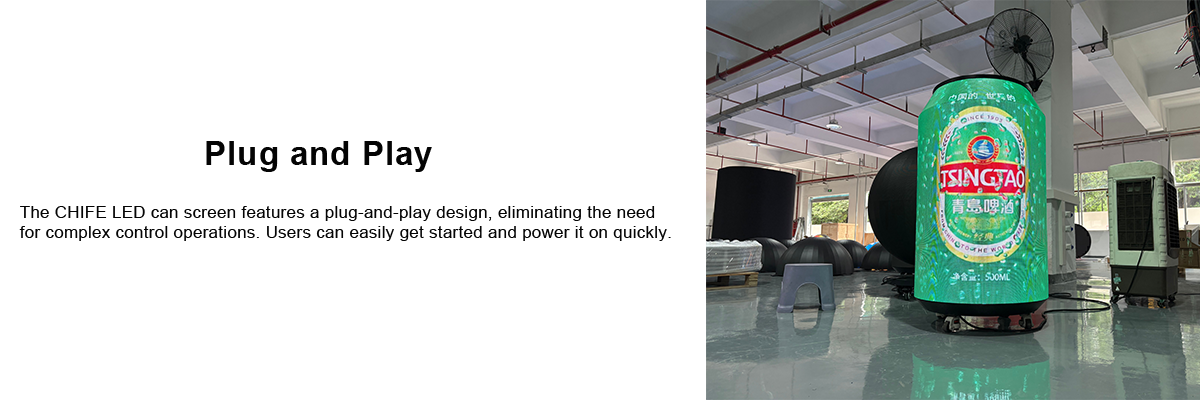
Modern can-shaped LED displays are equipped with integrated media players that support both synchronous and asynchronous control modes. Content can be updated remotely via Wi-Fi, 4G/5G networks, or USB devices through a cloud-based Content Management System (CMS), allowing users to manage advertising campaigns quickly and efficiently.
5. AI smart voice control
To further simplify operation, selected models support AI-powered voice control technology. Users can turn the display on or off, switch content, adjust brightness, and perform other functions using simple voice commands, providing a smarter and more convenient user experience.
6. Mobility and easy deployment
Many commercial can-shaped LED screens are designed with heavy-duty omnidirectional caster wheels and flight-case compatible structures. This portable design allows the display to be easily moved and installed for trade shows, exhibitions, roadshows, retail promotions, and other temporary events.
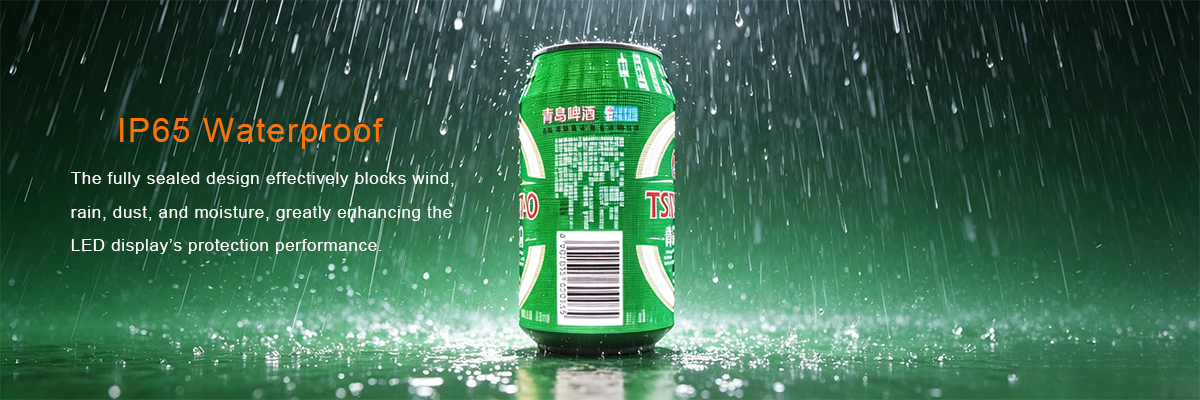
7. IP65 waterproof protection
Designed for both indoor and outdoor applications, the display features an IP65-rated waterproof and dustproof structure. This level of protection ensures stable performance in challenging weather conditions, including rain, humidity, and dusty environments.
8. Front maintenance design
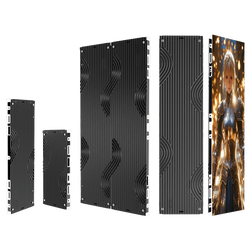
The front-service maintenance system allows technicians to access and replace LED modules, power supplies, and receiving cards directly from the front of the display. This significantly reduces maintenance time and installation space requirements, making it ideal for locations with limited rear access.
III. Prime application scenarios
The distinctive cylindrical shape of a can LED screen sets it apart from conventional flat displays. Rather than serving as a standard information board, it functions as a high-impact visual centerpiece designed to maximize brand exposure and audience engagement.
A. FMCG and beverage brand activations
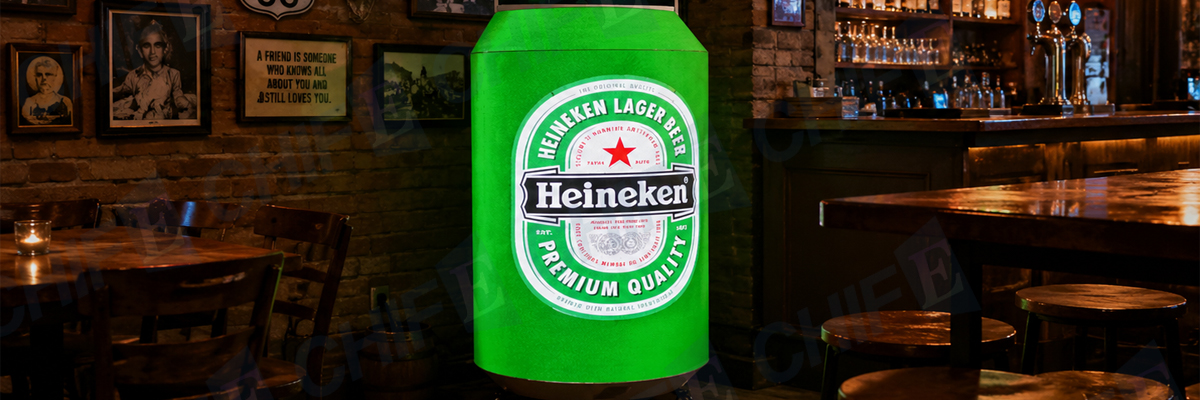
For global beverage brands such as Coca-Cola, Pepsi, Heineken, and Red Bull, a can-shaped LED display serves as a larger-than-life digital replica of the product itself. Installed in supermarkets, convenience stores, shopping centers, or promotional pop-up events, it can showcase immersive visual content such as sparkling bubbles, ice-cold condensation, or beverages being poured in real time. These vivid sensory effects help attract attention, reinforce brand recognition, and encourage impulse purchases.
B. Bars, nightclubs, and entertainment venues
In nightlife environments, creating a memorable atmosphere is essential. Whether suspended from the ceiling, integrated into architectural columns, or positioned as a centerpiece above a circular bar, a cylindrical LED screen can synchronize with music and lighting systems. By reacting to live audio frequencies and DJ performances, it transforms ordinary structures into dynamic visual attractions, enhancing the overall entertainment experience.
C. Shopping malls and atrium advertising
Modern shopping malls experience continuous foot traffic from multiple directions and levels. Strategically placing a freestanding can LED display along major walkways or suspending a large cylindrical screen in a central atrium allows brands to capture attention from every angle. Visible from the ground floor to the upper levels, these displays create a powerful visual presence and serve as premium digital-out-of-home (DOOH) advertising assets.
D. Trade shows and corporate showrooms
At crowded exhibitions and industry events, attracting visitors is often the biggest challenge. A creatively designed can-shaped LED display immediately stands out among traditional booth structures, drawing attention through its unique appearance and immersive content. As a result, it helps exhibitors increase booth traffic, strengthen brand recall, and create a lasting impression on potential customers and business partners.
IV. Pros and Cons of can LED screens
Advantages:
a. Extreme visual differentiation: Outperforms standard LCD or LED banners by offering high-order novelty.
b. Space-efficient geometry: Occupies minimal floor space relative to its total active display surface area.
c. Easy to operate: The Coca-Cola Can LED Display is delivered as a fully assembled, ready-to-use product. There is no need to hire a professional installation team for setup and commissioning, nor is it necessary to apply for local construction permits, making deployment quick, convenient, and hassle-free.
d. High engagement: Studies show that 3D-shaped digital objects enjoy a significantly higher attention retention span over flat signage.
Disadvantages:
a. Higher upfront cost: Custom flexible PCBs, specialized structural frames, and precise molding push manufacturing costs above generic flat LED walls.
b. Content restrictions: Content must be intentionally filmed or edited for cylindrical projection. Standard flat videos with critical text on the extreme edges will wrap out of site, requiring a central focus or a rotating canvas approach.
V. Frequently asked questions (FAQ)
Q1: How do you make video content for a Can LED Screen?
A: Content is created by mapping the video grid onto a flat plane that represents the unrolled surface of the cylinder (known as UV mapping). Animators layout the canvas so that when the edges stitch together on the screen, the loop is seamless. Text or logos are typically designed to rotate slowly across the canvas so that they remain readable as foot traffic circles the unit.
Q2: What is the difference between standard flexible displays and GOB Can screens?
A: Standard flexible screens expose the raw SMD lamps on the surface. While highly flexible, they are vulnerable to water droplets, dust, or accidental bumps by passing shoppers. GOB (Glue on Board) technology applies an optical-grade transparent protective layer across the modules. This makes the can screen impact-resistant, dustproof, and easy to clean with a damp cloth—an essential upgrade for public retail environments.
Q3: Are these screens difficult to maintain if a sector malfunctions?
A: No. High-quality can displays use magnetic front-access mechanisms. Using a specialized magnetic vacuum tool, an engineer can safely pull a single small flexible module out from the front facade within seconds, swap it out, and fix a pixel issue without turning off or dismantling the structural column.
VI. Future outlook: Where is the market heading?
The future of creative shaped LED screens lies in the convergence of smarter interactive chips and tighter pixel structures. We anticipate three massive shifts by the end of the decade:
1. COB (Chip-on-Board) dominance: As COB technology drops in production cost, flexible displays will achieve sub-P1.0 pixel pitches. This means even from a few inches away, the can screen will look as smooth and sharp as a premium smartphone display.
2. Interactive IoT integration: Future can displays will integrate proximity sensors, NFC fields, and touch layers. Imagine a consumer touching the virtual digital label of a soda can display to receive a discount coupon pushed instantly to their smartphone.
3. Real-time AI renderings: Generative AI engines mapped to environmental sensors will allow the screen’s artwork to change on the fly. On a hot summer day, the screen will automatically prioritize cold, frosty visual styles; on rainy winter evenings, it will transition into warm, ambient animations.
VII. Technical specifications of Coke can LED display
Category | Specification details |
|---|---|
Dimensions | 1500x800mm / 2000x800mm / 1750x900mm / 2250x900mm |
Pixel pitch | P1.25 / P1.86 / P1.875 / P2 / P2.5 / P5 |
LED module size | 320x160mm / 240x120mm |
Brightness | 600 - 1200 nits |
Refresh rate | 3840Hz |
Maintenance | Front service |
Control system | Novastar / Colorlight / Huidu |
Refrigerator | Optional |
VIII. Conclusion
The can LED ccreen is more than just a novelty, it is a high-yield spatial computing medium designed for an era that values physical experience. By combining high-definition panoramic imagery with instant physical recognition, it bridges the gap between digital content and immediate consumer emotion. For brands ready to make an unforgettable statement on the retail floor or at the next global trade summit, changing the shape of your display might just be the fastest way to reshape your bottom line.


Comments