
9 factors affecting the customization price of LED church displays
When a church committee or house of worship decides to upgrade their sanctuary with modern visual technology, the most common question that arises is: "How much does a church LED display cost?"
Unlike standard commercial indoor billboards, church LED displays are highly customized systems. Every sanctuary possesses unique architectural constraints, ambient lighting conditions, and specific viewing angles. Therefore, a cookie-cutter solution rarely works. Understanding the total cost of ownership (TCO) and the engineering behind customization helps church leaders make informed investments without hidden fees.
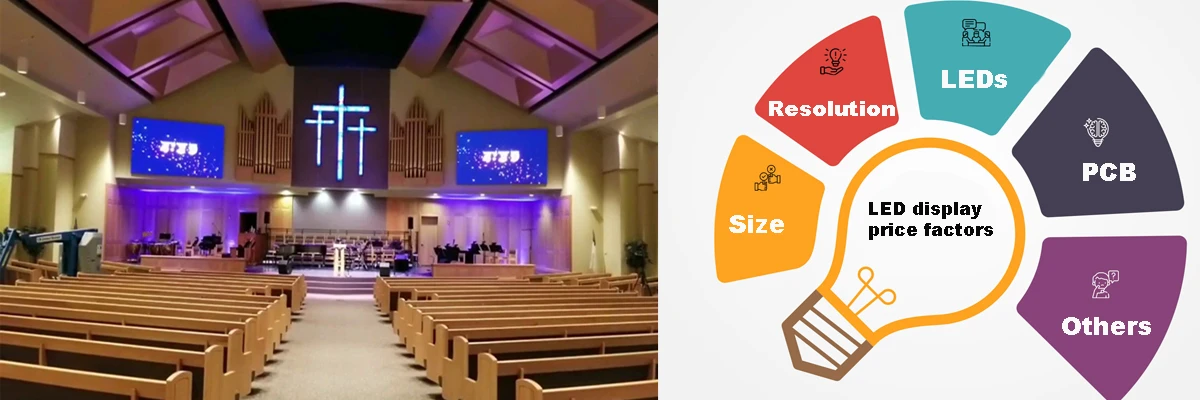
Here is an in-depth breakdown of the 9 critical factors that directly affect the customization price of LED church displays, helping you optimize your ministry's worship budget.
- 11. Pixel Pitch & Optimal Viewing Distance
- 22. Packaging Technology: COB, MIP, vs. Traditional SMD
- 33. Screen Shape & Creative Structural Customization
- 44. Ambient Light Levels & Customized Brightness
- 55. Installation Methods & Load-Bearing Engineering
- 66. Control System, Refresh Rate, & Broadcasting Needs
- 77. Component Brand & Operational Longevity
- 88. Power Consumption & Thermal Management
- 99. Logistics, Packaging, & Lifeline Spare Parts Allocation
- 10Frequently Asked Questions (FAQ)
1. Pixel Pitch & Optimal Viewing Distance
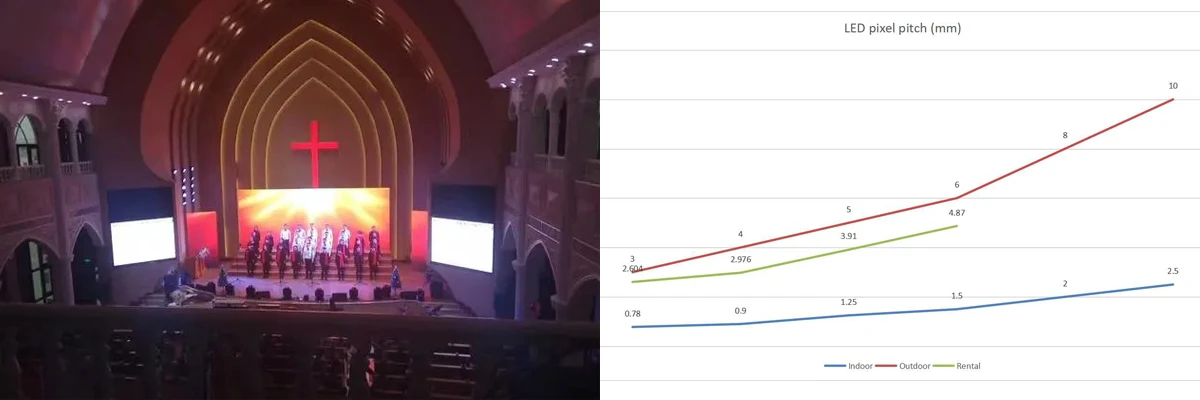
Pixel pitch (the distance from the center of one LED pixel to the center of the next pixel, measured in millimeters) is the primary cost driver. A smaller pixel pitch means higher pixel density, higher resolution, and consequently, a higher price.
Main Stage Backdrop: Typically requires a finer pitch such as P1.8, P2.0, or P2.5 so that the congregation can see crisp lyrics and scripture even from the front rows.
Side Screens / Overflow Rooms: If the viewing distance is further (above 10 meters), P3.0 or P4.0 is a highly cost-effective choice that saves budget without sacrificing visual clarity.
2. Packaging Technology: COB, MIP, vs. Traditional SMD
The choice of LED diode encapsulation technology directly impacts the upfront customization price and long-term durability. This is a crucial consideration for church environments:
Traditional SMD (Surface Mounted Device): The most budget-friendly option, offering excellent brightness and color uniformity. However, the exposed diodes can be vulnerable to accidental physical impact during stage set changes.
COB (Chip on Board) & MIP (Micro LED in Package): These represent the next generation of display technology. By sealing the chips directly on the board, COB and MIP provide supreme anti-collision, moisture-proof, and dust-proof capabilities. If your pastor interacts closely with the screen, or if children have access to the stage, investing in custom COB/MIP technology ensures a much longer lifespan and lower maintenance costs.
3. Screen Shape & Creative Structural Customization
Many modern church architectures require more than a flat 16:9 rectangle. Creative shapes elevate the spiritual atmosphere but require advanced structural engineering:
Curved & Arc-Shaped Screens: Custom curved LED cabinets allow the display to seamlessly follow the contour of an architectural wall, providing immersive viewing angles for side sections.
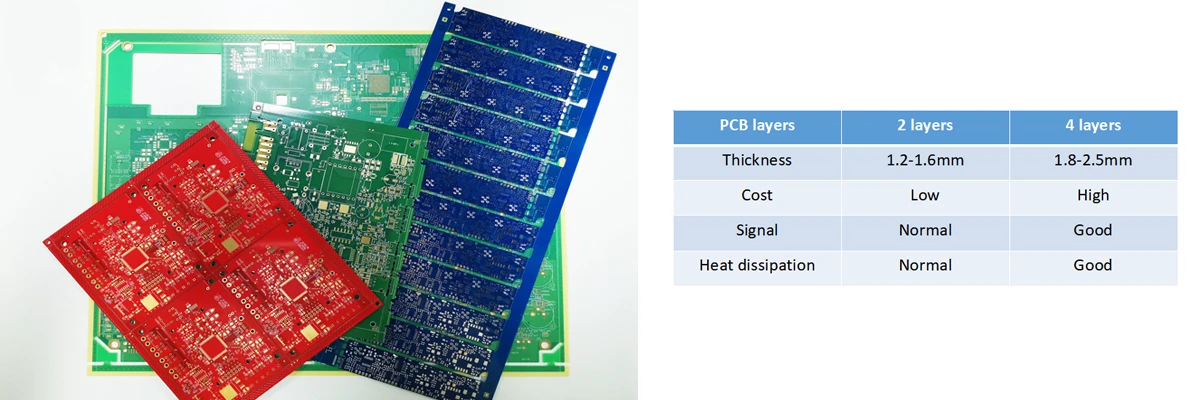
Irregular Shapes (Cross, Arch, or Spherical layouts): Customizing a cross-shaped LED pillar or an arched altar background requires bespoke PCB designs and specialized frame molds, which typically adds 15% to 30% to the structural engineering budget.
4. Ambient Light Levels & Customized Brightness
Church sanctuaries often feature beautiful, large stained-glass windows that flood the room with natural ambient light, especially during morning services.
Standard indoor LED screens offer around 600–800 nits of brightness, which can appear washed out in high-daylight environments.
High-Brightness Customization: For bright sanctuaries, customizing the panels to deliver 1,200 to 1,500 nits with high contrast ratios ensures vibrant visuals even in direct sunlight. For outdoor church marquee signs or seasonal outdoor worship events, fully weatherproof panels rated at 5,500+ nits (IP65) are required.
5. Installation Methods & Load-Bearing Engineering
Historical and traditional church buildings often have structural limitations. How the screen is mounted heavily influences the overall quotation:
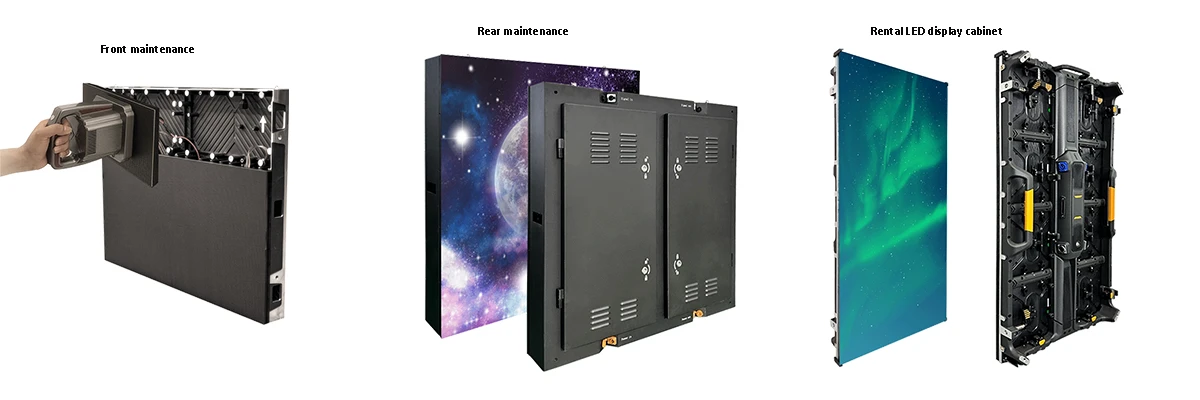
Wall-Mounted / Embedded: Requires a slim, front-serviceable custom frame. Wall structure reinforcement might be necessary depending on the wall's material.
Hanging System (Flybars): Ideal for stages with high ceilings. It requires light-weight magnesium alloy cabinets to minimize the structural load on the roof trusses.
Ground Stacking / Stage Rental Style: Perfect for multi-functional spaces or churches that share rented spaces. A robust, custom-engineered floor truss system provides mobility but adds to the hardware cost.
6. Control System, Refresh Rate, & Broadcasting Needs
If your church live-streams services to YouTube/Facebook, or records ceremonies for broadcast, standard components won't suffice.
Flicker-Free Performance: Customizing the screen with premium driver ICs to achieve a 3,840Hz+ refresh rate prevents ugly black scanning lines (Moiré effect) from showing up on your camera feeds.
Video Processing: Advanced control systems (like NovaStar or Colorlight) paired with custom multi-window video processors allow seamless switching between live camera feeds, song lyrics, and sermon presentation slides (compatible with software like ProPresenter).
7. Component Brand & Operational Longevity
What is inside the LED cabinet determines the stability of your investment. Customizing a screen with tier-1 components increases the initial price but eliminates frequent failure headaches:
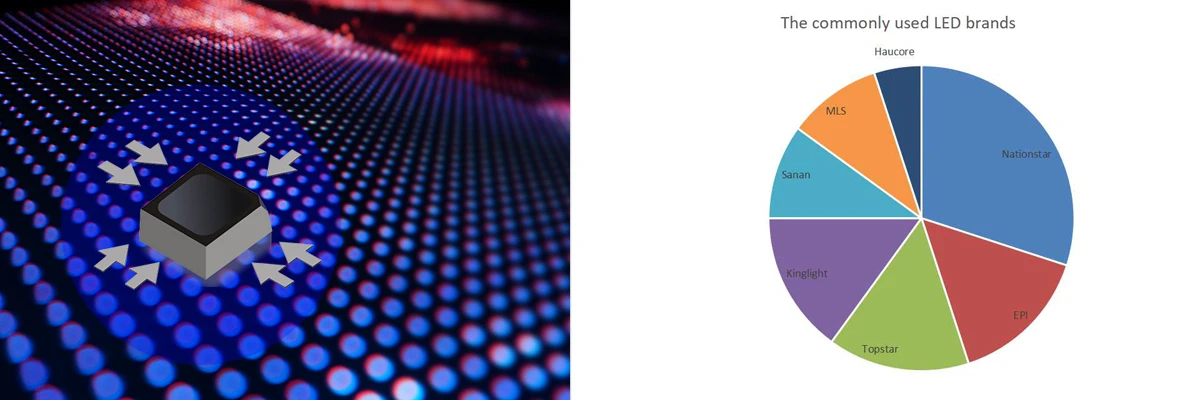
LED Diodes: Nationstar or Kinglight gold/copper wire lamps provide superior color rendering and lower decay.
Power Supplies: Top-tier brands like Mean Well ensure high energy-conversion efficiency, quiet fanless cooling, and protection against power surges.
8. Power Consumption & Thermal Management
Large LED walls pull substantial electrical current. Customizing your display with Common Cathode Energy-Saving Technology can reduce power consumption by up to 30%. While the initial setup price is slightly higher, it dramatically reduces the church’s monthly electricity bill and lowers heat dissipation, meaning the sanctuary's AC system won't have to work overtime to keep the congregation cool.
9. Logistics, Packaging, & Lifeline Spare Parts Allocation
Safe transit and future-proofing are part of the total project cost:
Packaging: Custom heavy-duty flight cases (for mobile ministries) or reinforced wooden crates (for permanent installation) protect fragile modules during international shipping.
Spare Parts Buffer: Reliable manufacturers include a customized batch of spare parts (approx. 2%–5% of extra modules, receiving cards, and power supplies from the exact same production batch) to ensure that if a pixel goes out years down the road, it can be replaced instantly without color mismatching.
Feature | Soft(Wired) connection | Hard(Wireless) connection |
Photo | 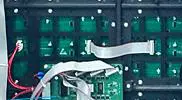 | 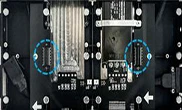 |
Stability | High | Low |
Signal Transmission | Stable | Prone to attenuation, susceptible to interference |
Heat Dissipation Performance | Good | Poor |
Installation and Maintenance | Difficult | Easy |
Flexibility | Poor | Good |
Cost | Higher | Lower |
Frequently Asked Questions (FAQ)
Q1: How long will a customized church LED wall last?
A: High-quality customized LED displays are rated for 100,000 hours of operation. Under normal church usage (weekly services, mid-week rehearsals, special events), the screen can easily last over 10 to 12 years.
Q2: Can our church volunteers install the LED screen to save on labor costs?
A: While we provide detailed custom structural engineering drawings and step-by-step video guidance, we highly recommend having a local certified structural engineer or professional AV contractor oversee the final mounting and electrical hookup to ensure strict safety compliance.
Q3: Does the display system integrate with church presentation software?
A: Yes. Our custom LED video processors accept standard HDMI/DVI/SDI inputs and seamlessly sync with industry-standard worship software including ProPresenter, EasyWorship, and MediaShout.
In conclusion, the price of church displays is influenced by various factors. We need to customize church LED displays based on different requirements to suit a variety of application scenarios. CHIFELED is always committed to providing you with the highest quality and most cost-effective church display solutions.



Comments