
9 best LED screen installation methods: the complete guide
LED displays are widely used in indoor,outdoor, advertising, stage, stadium and other fields. According to the user's different environment, LED video walls are divided into a variety of installation methods, including: wall-mounted, cantilevered, inlaid, column, standing, roof, mobile, stadium fence type, rental and lifting type, arc Form and other installation methods. so today let's take a look at these LED signs installation methods.
- 11. LED screens wall-mounted installation
- 22. Mosaic installation in the wall
- 33. Column type installation for LED billboard
- 44. Cantilever installation
- 55. Hanging way to install the LED signage
- 66. Rental lifting method
- 77. Roof type LED billboard installation
- 88. Stand-up way to install LED display
- 99. Other installation methods
1. LED screens wall-mounted installation
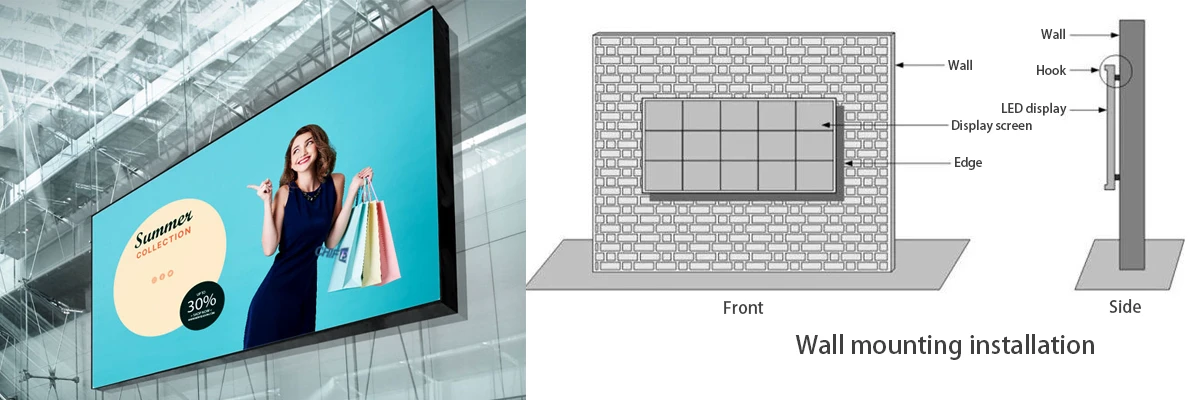
The wall-mounted installation method is widely utilized for both indoor and outdoor applications where the screen needs to be integrated directly onto a solid wall. Since the entire LED display is mounted flush against the surface, there is typically no space for rear-door maintenance. Therefore, we strictly recommend using front-maintenance LED modules for this method, allowing for easy component replacement from the front side. For smaller displays, front service is optional as the entire unit can be safely detached for servicing.
2. Mosaic installation in the wall
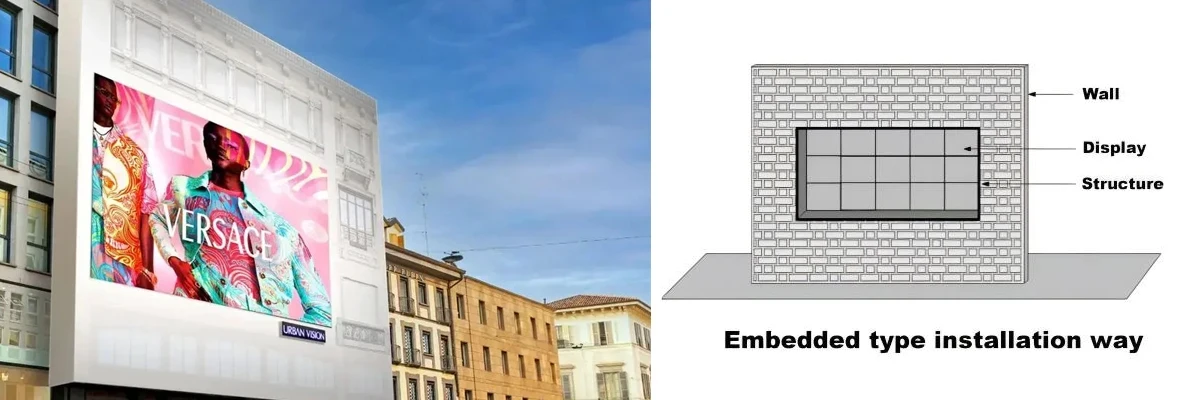
Compared to standard wall-mounting, Mosaic (or embedded) installation involves recessing the LED display into a pre-constructed wall cavity. This method is favored for high-end retail and corporate lobbies because it enhances overall aesthetics by keeping the screen surface level with the wall, effectively saving space while providing a sleek, modern look. To ensure long-term reliability and ease of repair, the use of front-servicing LED modules is essential, as the recessed structure completely blocks rear access.
3. Column type installation for LED billboard
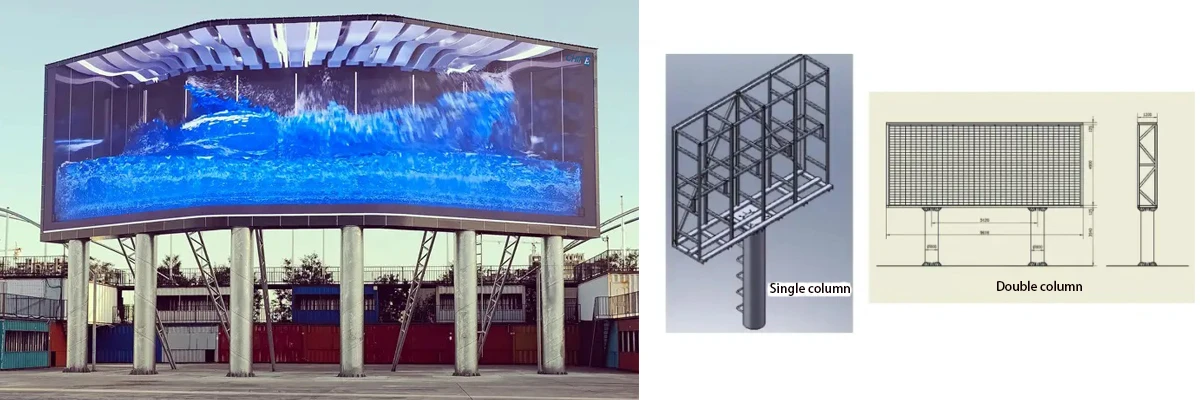
Column-type installations are the primary choice for outdoor advertising billboards along highways or in open plazas. This structural design can be configured as a single-sided, double-sided, or even triple-sided display to maximize visibility from multiple directions. The installation involves a robust steel column anchored into a heavy-duty concrete foundation, ensuring stability against high wind loads.
4. Cantilever installation
Cantilever installation features a horizontal support arm that extends the screen out from a wall or pillar. This method is most commonly applied in indoor and semi-outdoor transit hubs such as railway stations, subways, and bus terminals where space is at a premium and clear sightlines are required from a distance. It allows the display to be positioned prominently over walkways without obstructing pedestrian flow.
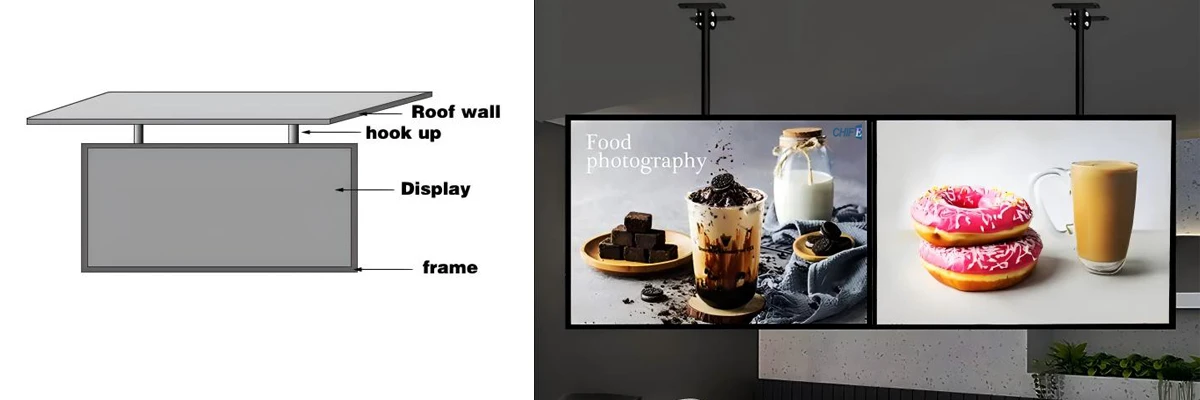
5. Hanging way to install the LED signage
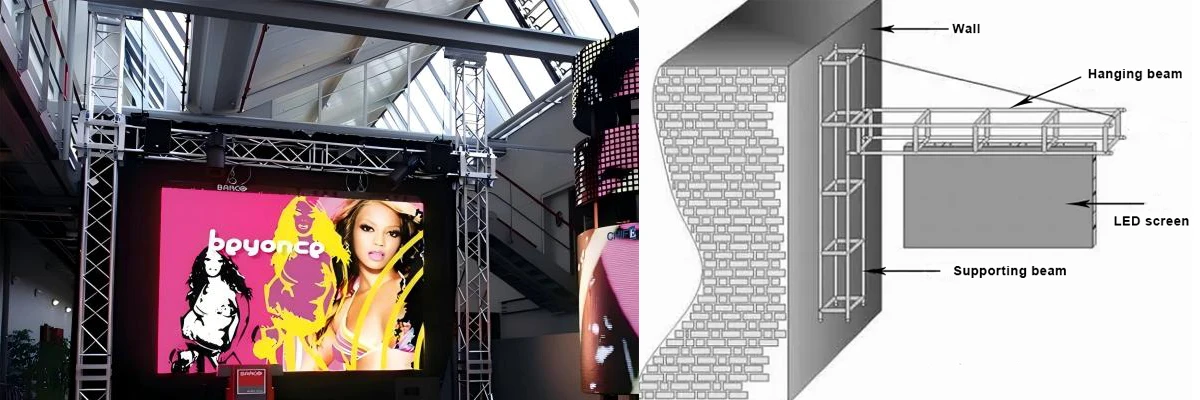
Similar to the cantilever method, the hanging installation uses overhead structures to suspend the display. This is ideal for indoor environments like shopping malls or exhibition halls where floor space must remain clear. The screen body typically adopts an integrated cabinet design, providing a lightweight yet durable solution that can be safely secured to ceiling beams or specialized mounting tracks.
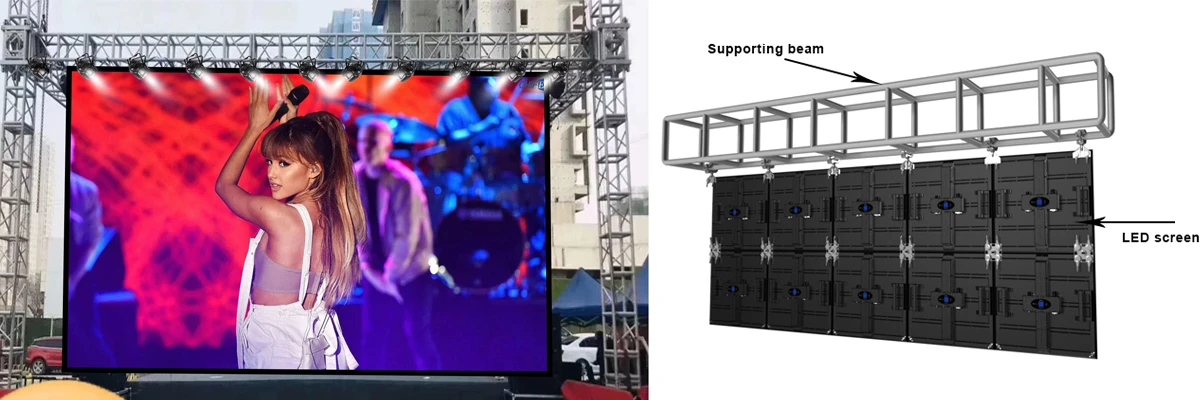
6. Rental lifting method
Lifting (or suspended) LED screens are designed for temporary events such as weddings, concerts, and corporate stages. These displays are built using specialized hanging beams and vertically connected lifting mechanisms. The cabinets are horizontally tightened with precision locks to ensure a seamless visual surface even when suspended at significant heights. This modular approach allows for rapid setup and teardown, which is critical for the rental industry.
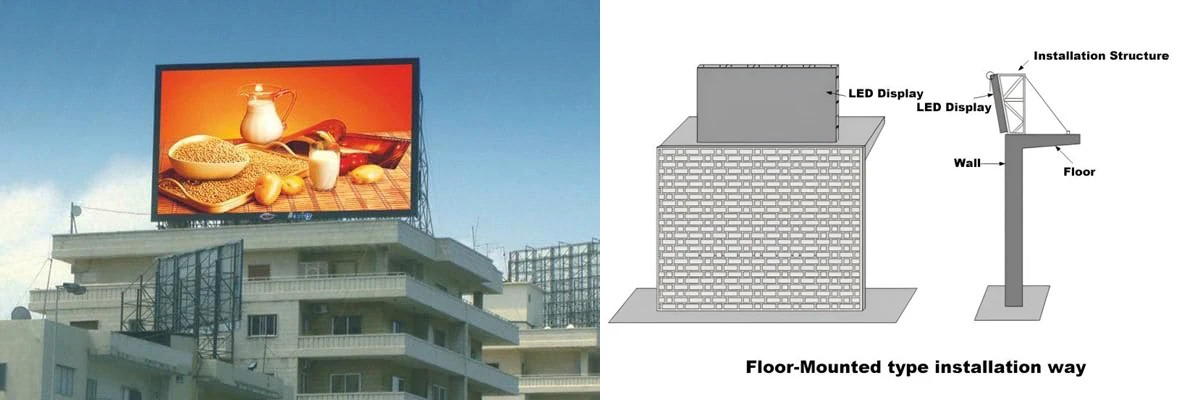
7. Roof type LED billboard installation
Roof-mounted displays are positioned at the highest points of buildings to achieve maximum long-distance exposure. Because these screens are exposed to extreme environmental conditions, this method has rigorous requirements for wind resistance and structural integrity. The steel frame must be firmly anchored to the building's load-bearing structure to ensure safety and prevent vibrations during inclement weather.
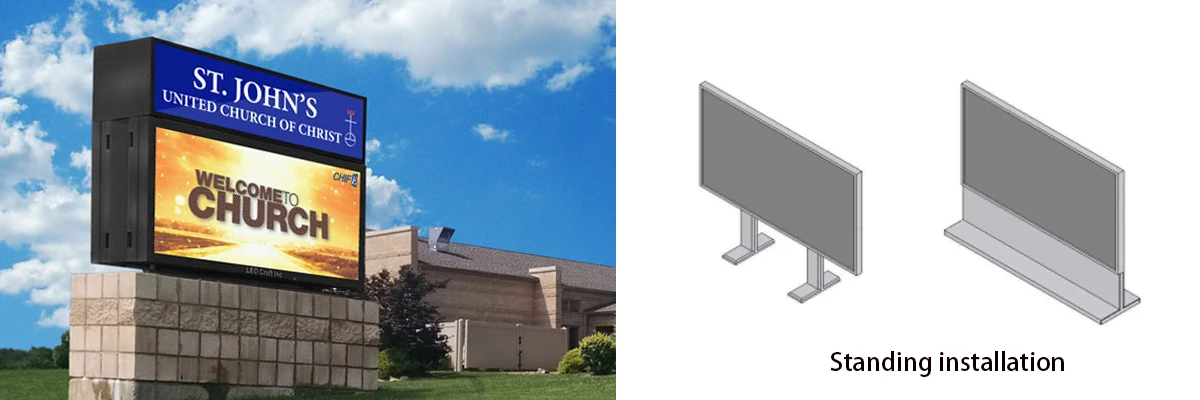
8. Stand-up way to install LED display
The stand-up (or floor-mounted) method is relatively simple to implement and offers the easiest access for maintenance. It is suitable for indoor digital posters, retail TV screens, or outdoor landmark logo signs. The display is supported by a base or a short frame, making it an excellent choice for informational kiosks and interactive displays in high-traffic areas.
9. Other installation methods
Beyond the common methods, stacking installation is often used for temporary stage backdrops where the screen is built from the ground up on a stable platform. Regardless of the chosen method, it is vital to adhere strictly to local construction standards and electrical safety codes. Proper installation ensures that the LED display delivers its full visual value while remaining a safe and reliable asset for years to come.



Comments